Simulations santé et biotech

Comprenez comment nos modèles, données et algorithmes de pointe sécurisent chaque décision en santé numérique.
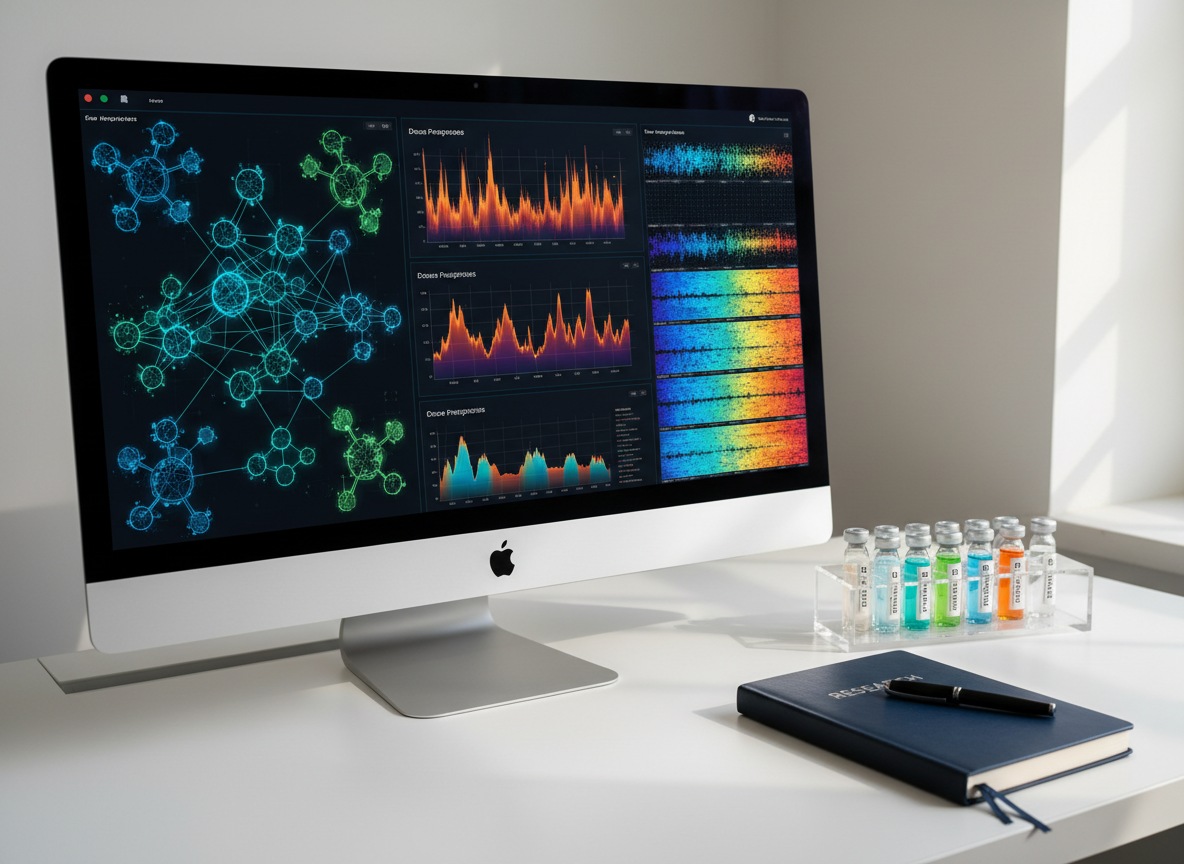
A widescreen monitor on a tidy white workstation displaying a detailed, multi-panel simulation of drug interactions: network graphs, dose-response curves, and heatmaps in vibrant blues, greens, and oranges against a dark interface. Beside the monitor, a closed lab notebook and a neatly aligned rack of labeled vials sit on the surface, adding tactile biotech context. Neutral, soft daylight streams from an unseen window to the right, balancing with the cool glow of the screen and casting gentle shadows. The mood is focused and methodical, highlighting the power of software in health discovery. Photographic realism, eye-level composition, with the monitor slightly off-center following the rule of thirds for a clean, professional SaaS dashboard illustration.
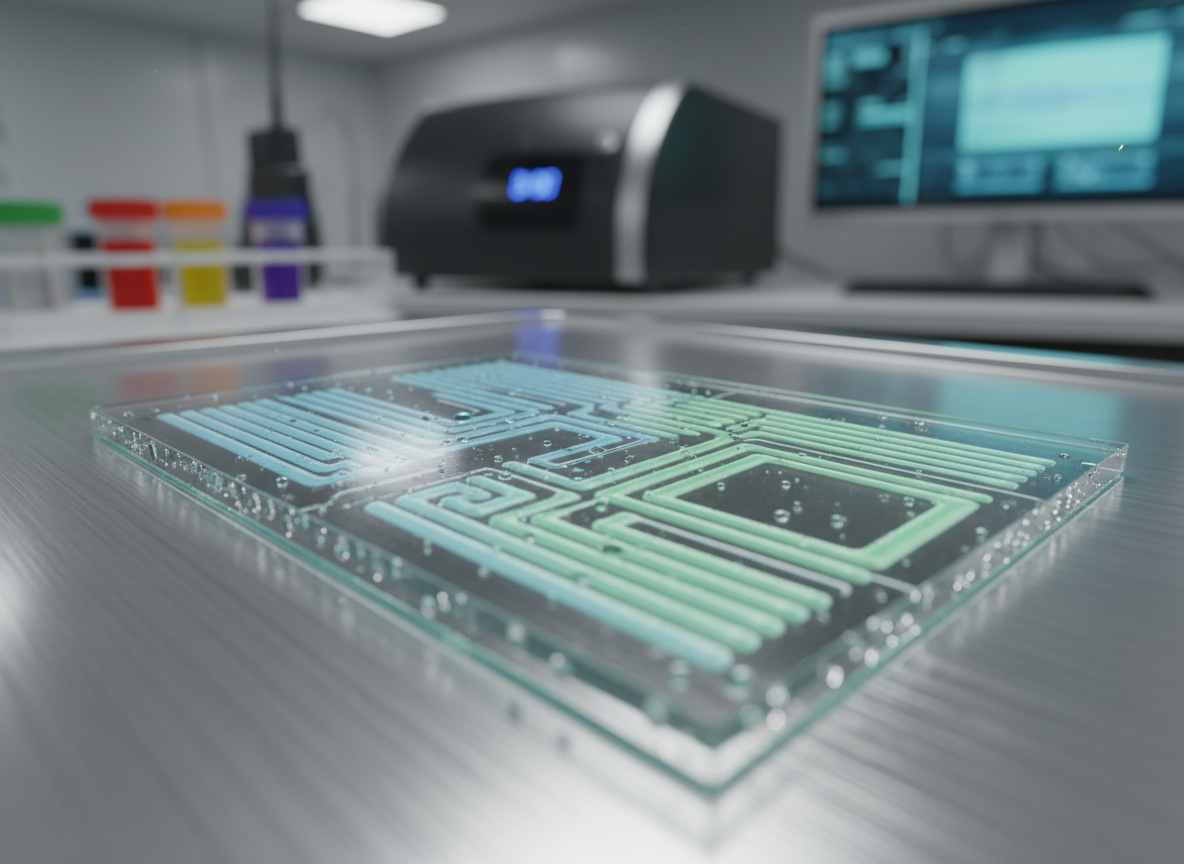
A high-resolution macro view of a microfluidic chip resting on a brushed aluminum surface, its tiny etched channels filled with faintly tinted blue and green fluids representing different biological samples. Fine condensation droplets catch the light along the chip edges, emphasizing scale and precision. In the softly blurred background, out-of-focus elements hint at an advanced lab: a rack of colored reagents, the corner of a digital analyzer, and a cool-toned monitor glow. Overhead diffused lab lighting creates even illumination with subtle metallic reflections. The mood is meticulous and innovative, perfect for showcasing biotech hardware that feeds into simulation software. Photographic realism, captured from a low, slightly diagonal macro angle to emphasize intricate detail and technical sophistication.

Fondements scientifiques de nos simulations

Nos simulations reposent sur une combinaison de modèles mécanistiques (dynamiques des systèmes biologiques, modèles compartimentaux, PK/PD), de modèles statistiques avancés et d’algorithmes d’apprentissage automatique. Elles intègrent des données cliniques et épidémiologiques anonymisées, des registres de santé, des bases omiques publiques, ainsi que des données issues d’essais précliniques et cliniques, toutes soumises à des procédures strictes de gouvernance et de contrôle qualité. Les algorithmes utilisés incluent des méthodes bayésiennes, des réseaux de neurones, des modèles de survie, des approches de causalité et des techniques de simulation de scénarios (Monte Carlo, agents‑based). Pour garantir la rigueur scientifique, chaque modèle est calibré, validé croisé sur des cohortes indépendantes, soumis à des analyses de sensibilité et à des revues d’experts médicaux et biostatisticiens. La transparence est assurée par une documentation détaillée des hypothèses, des sources de données, des limites des modèles et des indicateurs de performance, ainsi que par des rapports traçables permettant aux partenaires de comprendre comment chaque résultat a été généré.

Publications

Articles, études de validation et analyses pour preuves continues.

A large, wall-mounted digital dashboard in a modern research control room, visualizing a real-time simulation of global clinical trial outcomes with animated maps, survival curves, and risk profiles in coordinated blue and teal palettes. Below the screen, a minimalist console desk holds a wireless keyboard, a stylus, and a small, sleek hub device with soft white indicator lights. Indirect ceiling lighting combines with the screen’s cool glow, creating a focused yet calm environment. The composition is wide and cinematic, photographed straight-on with sharp clarity across the frame. The atmosphere is authoritative and data-driven, illustrating enterprise-level health biotech decision support for a professional SaaS audience.
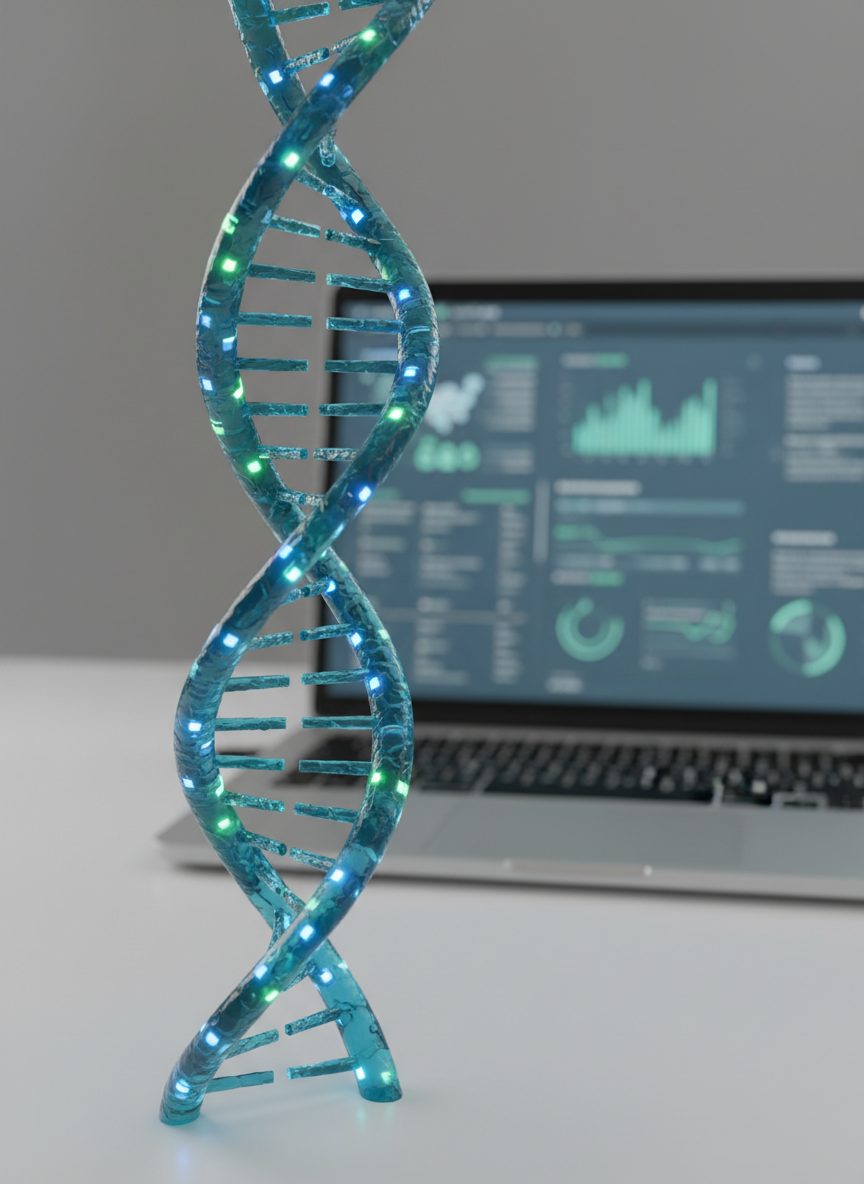
A close-up of a glossy, translucent 3D-printed model of a DNA double helix, its strands composed of semi-transparent blue and teal polymers, embedded with tiny LED-like nodes representing data points. The model stands on a matte white desk beside a slim laptop showing an out-of-focus simulation interface with graphs and timelines. Soft studio lighting from the left produces gentle highlights along the curved helix and subtle shadows on the desk. The atmosphere is analytical yet calm, conveying high-tech biotech research. Photographic realism, captured from a slightly low angle with shallow depth of field, emphasizing the helix as the focal symbol of digital health discovery.
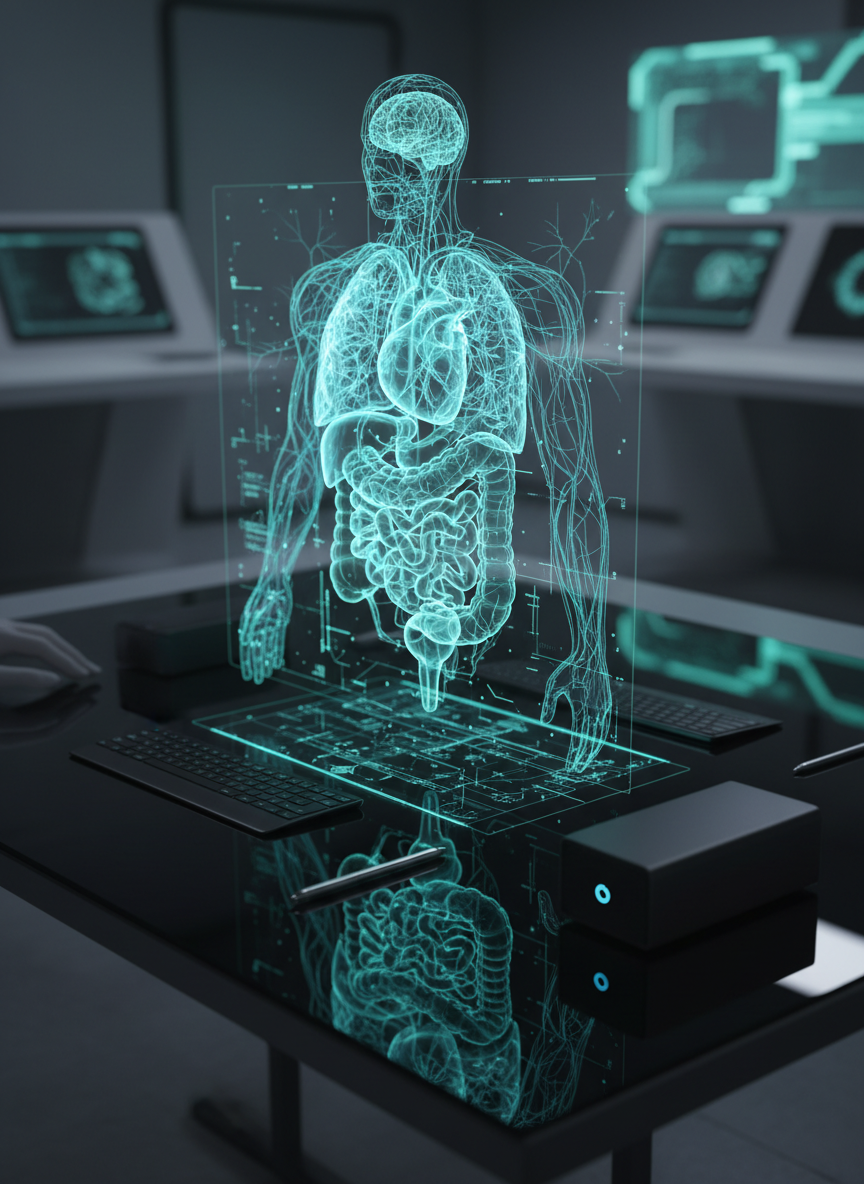
An illuminated, semi-transparent holographic model of a human organ system projected above a minimalist black glass table, with intricate networks of blood vessels and neural pathways glowing in blues and greens. Around the hologram on the table sit neatly arranged, powered-off devices: a slim keyboard, a stylus, and a compact workstation tower with soft indicator lights. The room is darkened except for the cool, focused glow of the hologram, casting delicate reflections on the glass and soft light on nearby surfaces. The mood is futuristic and precise, suggesting advanced simulation capabilities. Photographic realism, captured from a slightly elevated three-quarter angle, with sharp focus on the hologram and a subtly blurred, sleek lab environment in the background.
S’agit-il de votre nouveau site ? Connectez-vous pour activer les fonctionnalités d’administration et ignorer ce message
Se connecter